
IN DISCUSSION: Bronwen Gwillim
Featured Maker Spring 2026
Interview by GRACE WOLFE
We have the pleasure of welcoming Bronwen Gwillim as our featured maker for the
Crwydro |
Wanderings exhibition running March 28th until — June 6th.
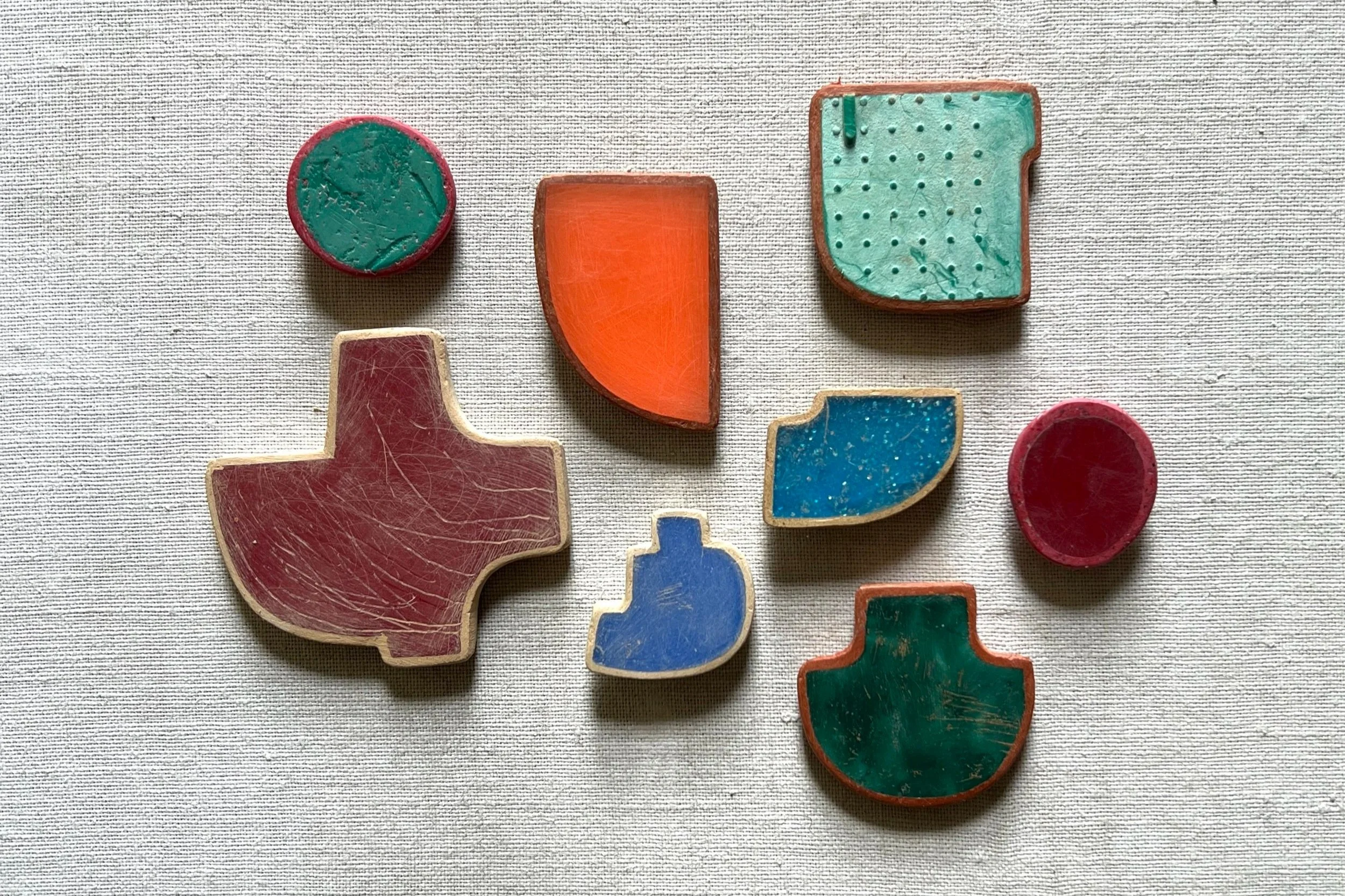
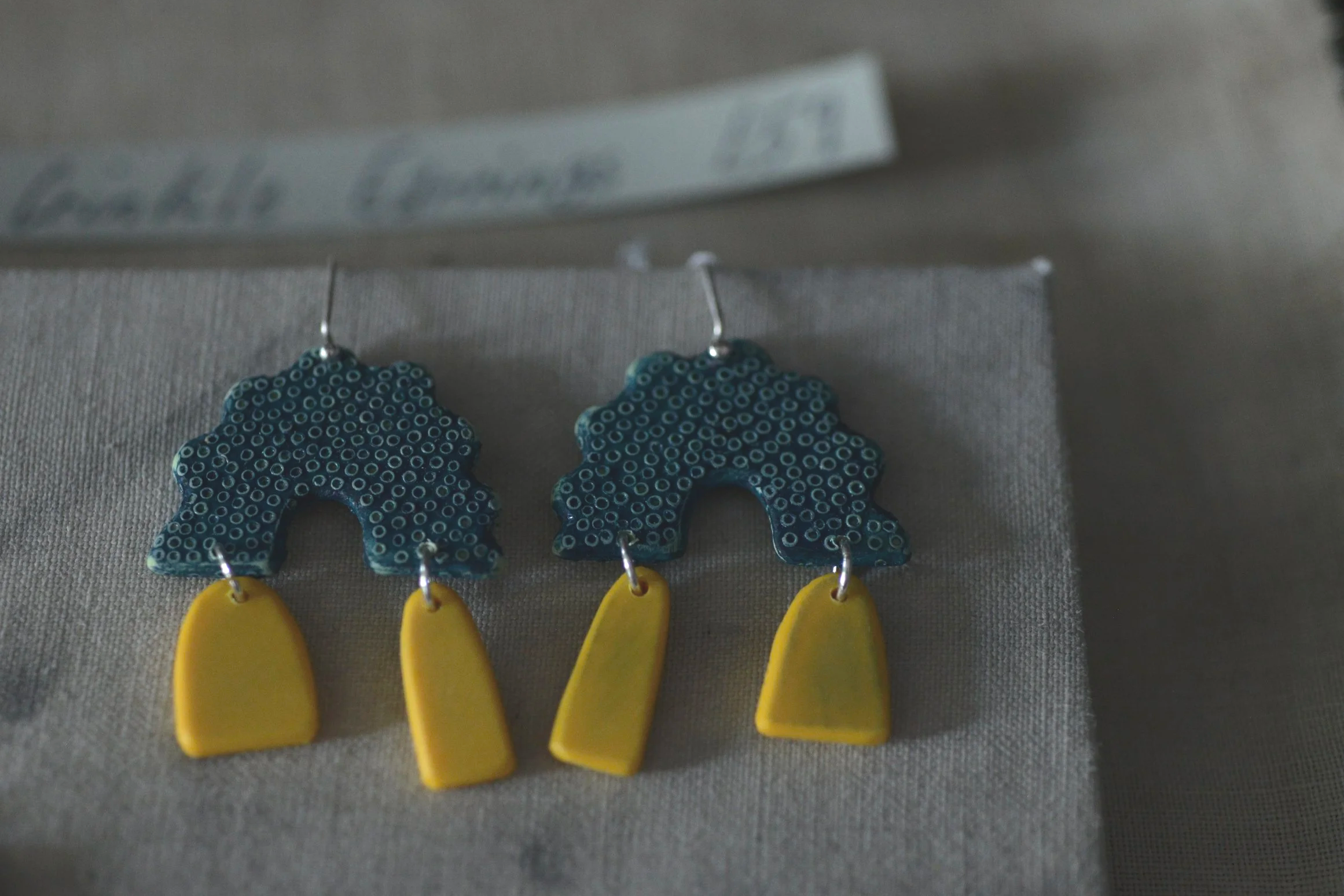
Based along the South coast of Pembrokeshire, her work stands at the intersection between art and sustainability, often commenting on the impact of nano plastics in local marine habitats. Through bold neon colours and upcycled manmade materials she is able to bring a playful take on the rise of plastic, expertly crafting what many consider to be waste into wearable art. Her multi discipline approach allows her to cast a wide net over not only jewellery - but also sculpture, paintings, and collage.
Bronwen’s work will be available to purchase online and at the Oriel Myrddin Gallery shop throughout Spring 2026.
Hello Bronwen! Your art can be discerned from other eco-artists by your incorporation of the unnatural. Having previously said that you transform something considered low-grade into something precious, could you talk about your inspiration working with low-grade materials when creating your work?
There’s two things I suppose. What is to hand is really important to me, and that's partly because I have something called aphantasia, which means I don’t have a visual imagination. So I actually have to rely on what I can see at any one time. I find it difficult to imagine things I can’t see, which is quite a rare thing.
The other reason is just about being sustainable. I live in quite a remote area, the nearest shop is 10 miles away. But there’s a fault line that runs from right outside my front door all the way to Swansea, and along that line, there's a very rich seam of sandstone and limestone. It results in these lovely lumps of clay in a range of colours from quite a yellow ochre through to reds, blacks and greys and even a kind of very pale kind of putty colour. But on that very same beach there is also huge amounts of plastic. I feel terrible when I see it - but with my colourist eye, I’m excited by these saturated bright colours against these very muted colours. So I suppose the question I have for myself is, if you love colour, but you're worried about the environment, what's the best thing you can do? So if I’m using waste or I’m not using waste, I’m trying to use things that have a low impact.
So, when you’re out looking for these materials, do you have a selection process for what you’ll take home?
Previously I’d been living in an urban area, so the plastic I collected was from skips and industrial estates. When I moved to the coast, people in the village found out I was making things from plastic - so they began collecting all their domestic waste and it got completely out of hand! I’m a beach cleaner as well, so I will always collect as much as I can, but I’m having to be much more selective with what I will take back to my studio. In terms of things I will use in my work, it needs to be the right colour and thickness. Most of the plastic I use has to be flat so I can cut it easily. So not everything will work.
If we look back at your journey as an artist, you first trained as a painter at Goldsmiths and then you pivoted to train as a silversmith at Camberwell. Was there anything in particular that caused this pivot between the two disciplines?
I’m a maker really. As I said, I don’t have this visual imagination, so I find it very difficult to think about an end product. The paintings, even then, were made with odd materials. I would paint with henna, spices, turmeric, my studio always smelt really strong. But I never really felt confident in the fine art world, so I started making jewellery. I went to Sir John Cass - which was a school for proper jewellers, where they were trying to teach me to make diamond rings. It was clear that wasn’t going to work for me, so that's when I signed up to Camberwell. It wasn’t a jewellery course. It was a metalwork and silversmithing course. It gave me an appreciation of materials and a craft approach , you learnt techniques. I learnt about metal, and that’s been a constant really. I get obsessed with different materials.
So what led you to begin turning your work into wearable art?
I had a period of my life when I’d been working very hard commissioning art in all sorts of different contexts for an arts and health agency, and then I got cancer. I had to take some time off and I was feeling pretty bad about myself. It was then that I thought - actually I need to make some really bright, bold jewellery for me to wear. It was about me reasserting myself after feeling quite low. So that got me back in, people would see what I was wearing and it just snowballed from that point. I gave up the stressful job and suddenly had a successful business making and selling jewellery from bright bits of waste plastic.
Your jewellery often doubles as a standalone art piece when not being worn. Is this something born from sustainability?
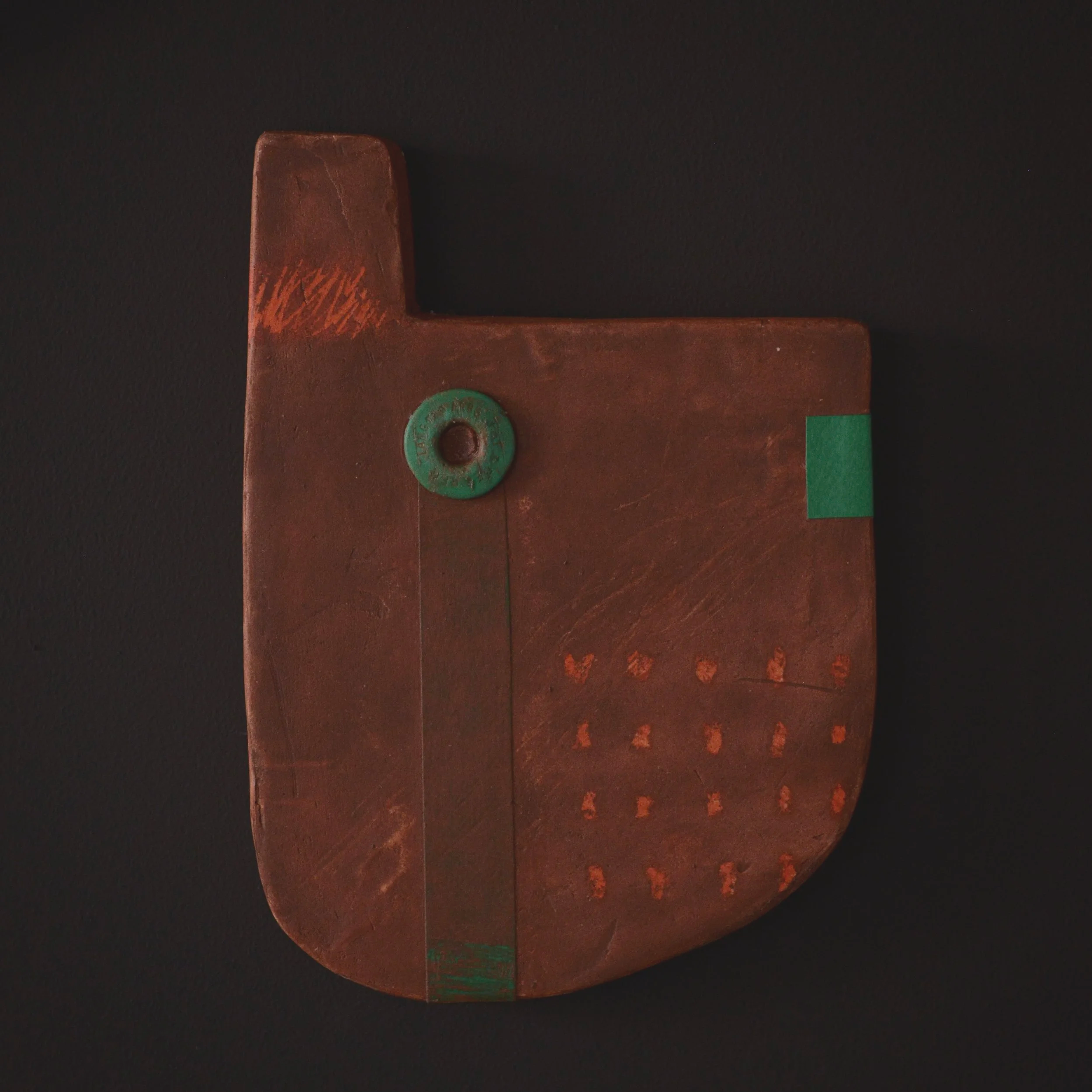
I think it’s interesting people’s relationship with things that they wear compared to things that they put on the wall. There was always a bit of frustration that I thought I’d made something that should be on display, rather than in a drawer. I’m interested in blurring the boundaries between what we wear and what we’ll put up in our home. However I don’t always have all my favourite things on the wall because I share my home with my husband. So it’s much more of a negotiated space - whereas your body is your space and you wear what you want to wear.
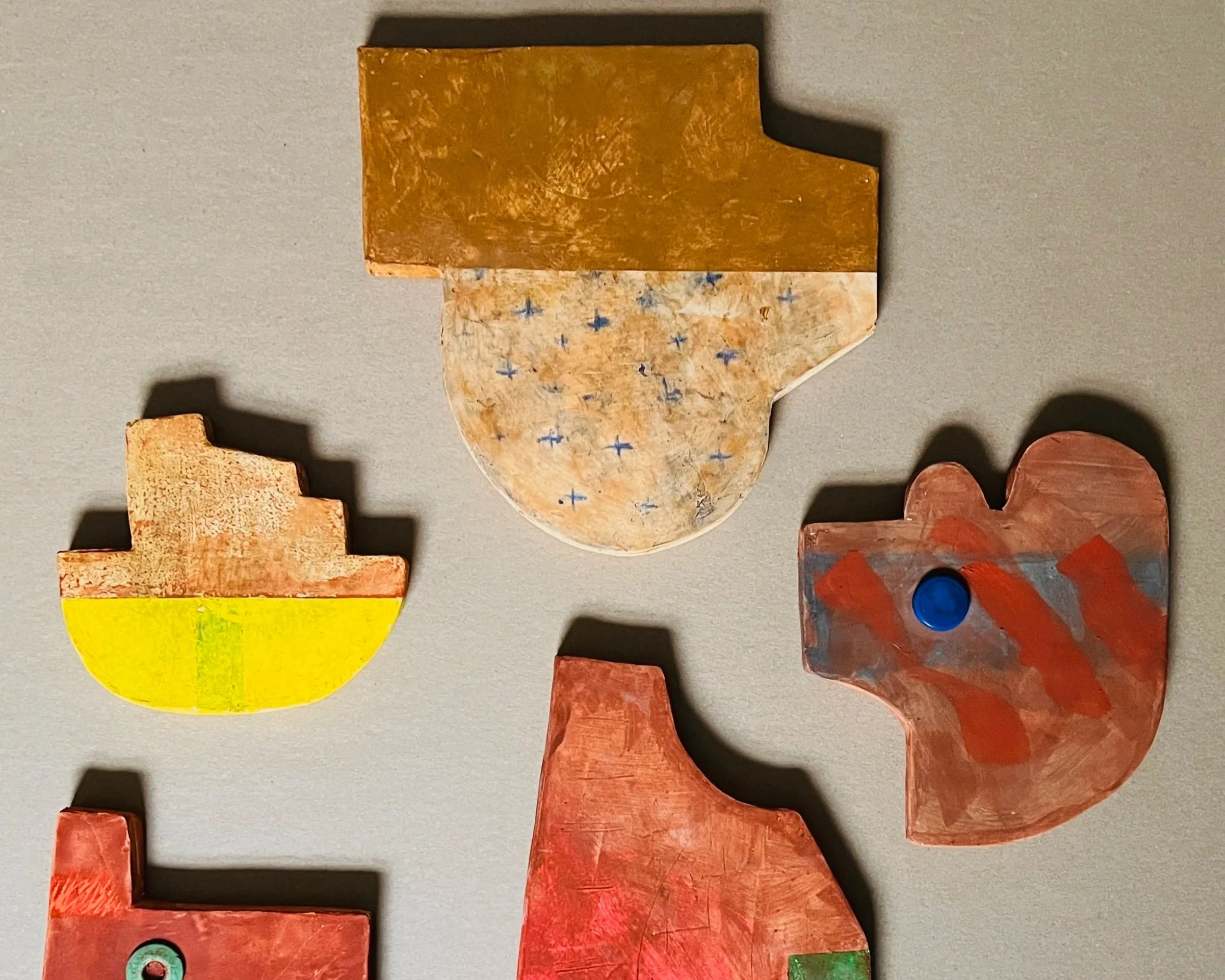
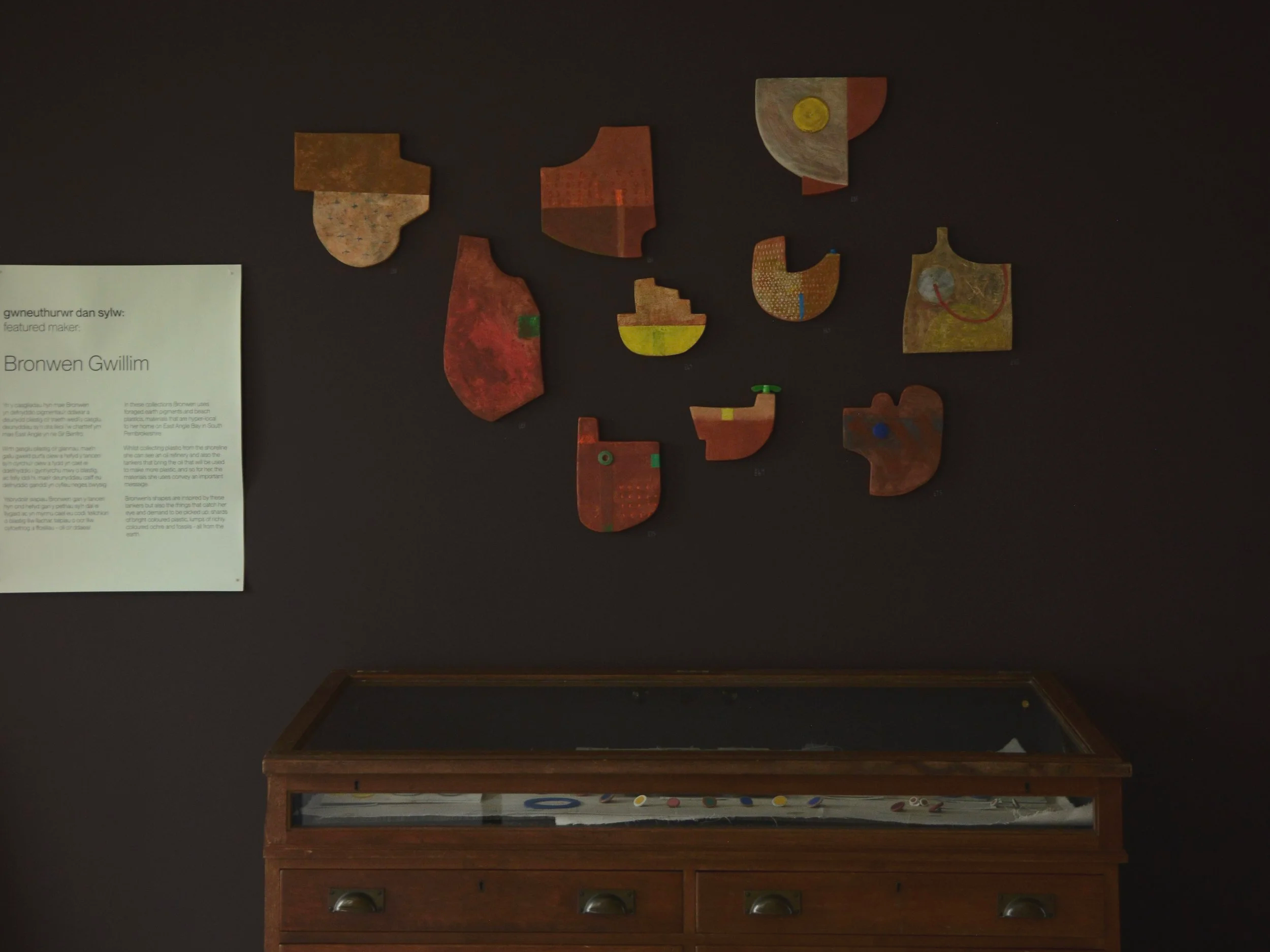
I find both your art and jewellery incorporates this really interesting use of negative space. For example, the pieces we’ve just hung up are these big red sweeps of colour with touches of blues, greens and yellows. Is there any specific intention behind that?
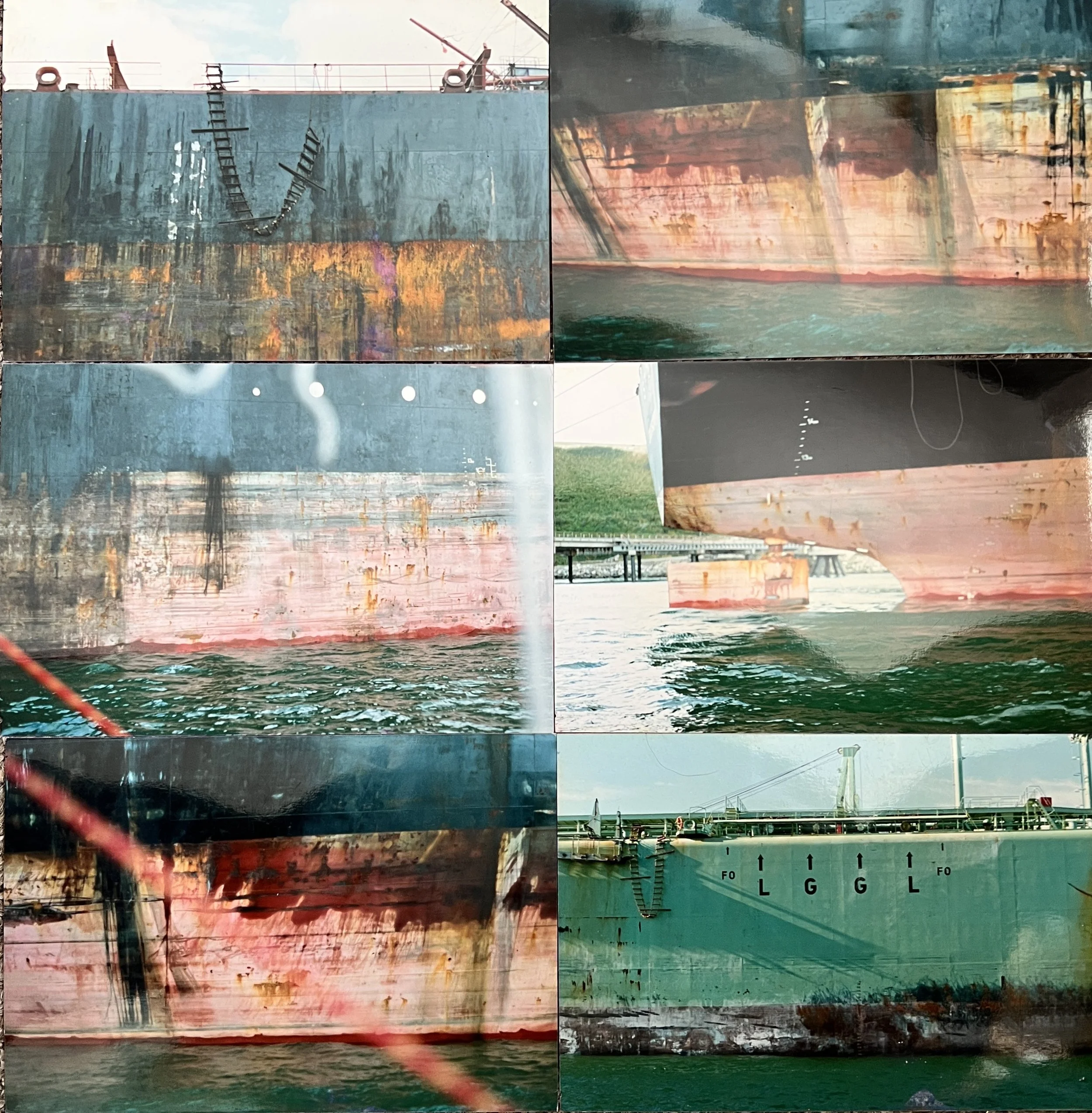
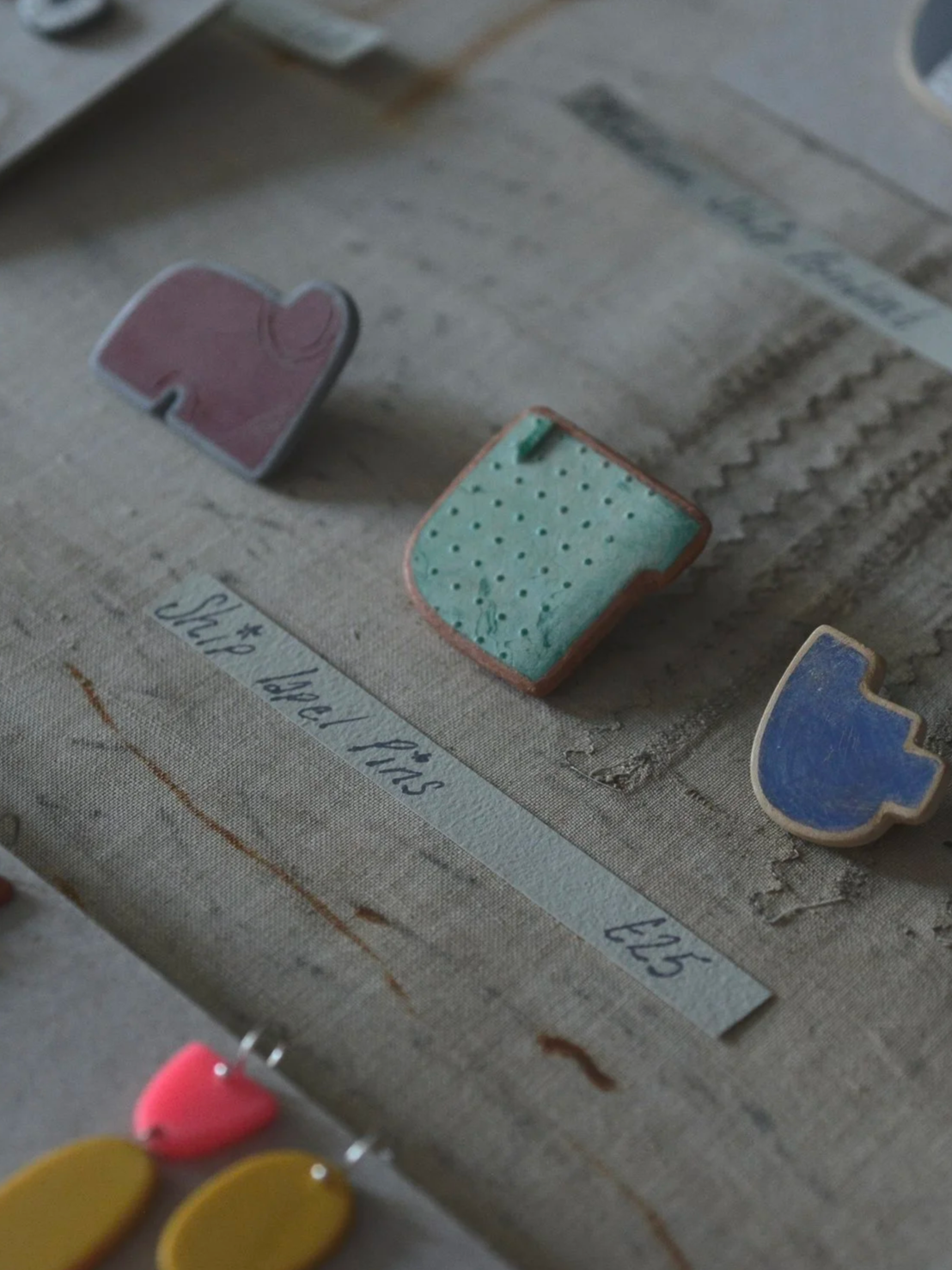
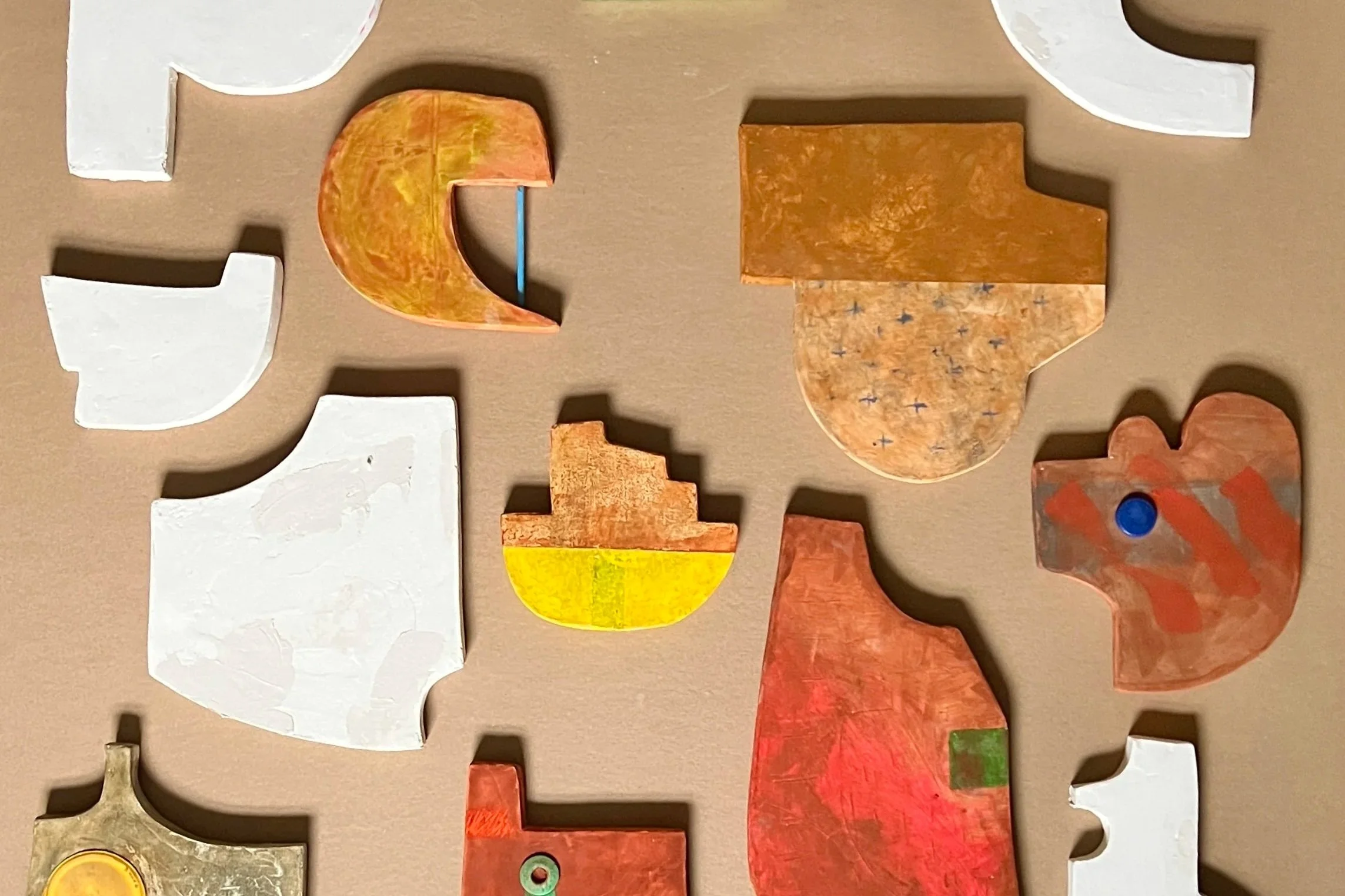
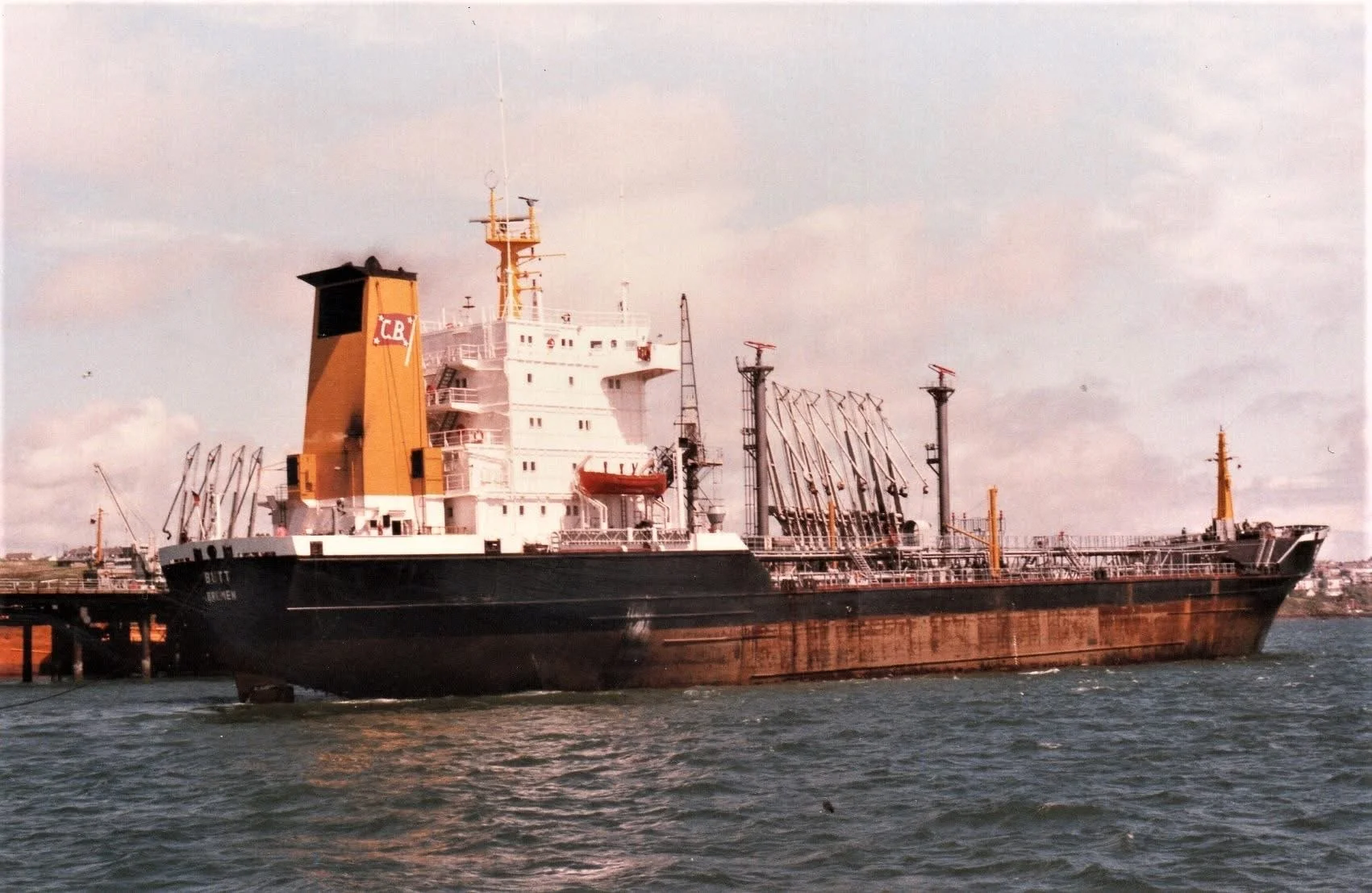
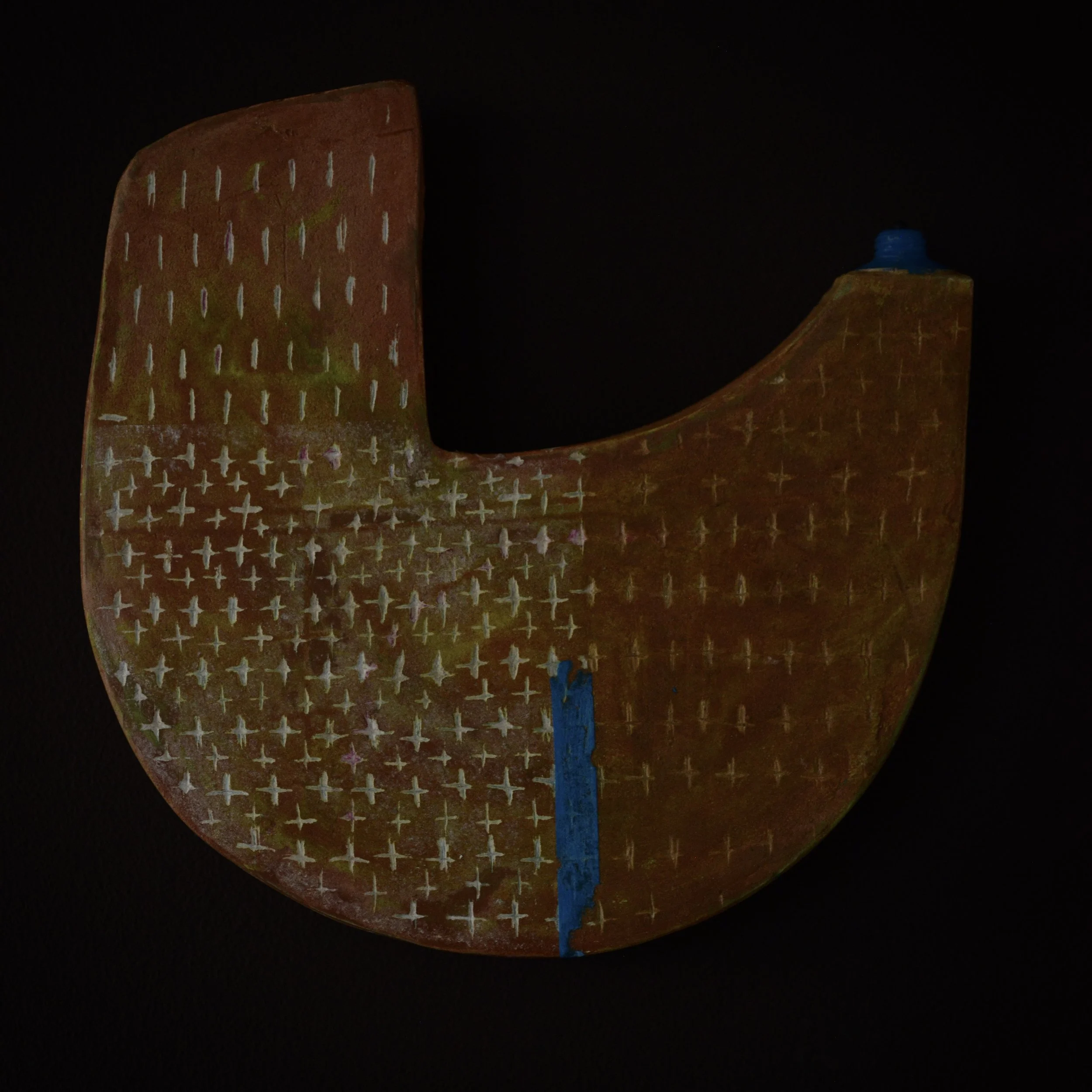
As I was referring to before, this aphantasia thing makes image-making really difficult. So when I do have to make shapes or choose motifs, then they are usually things very dominant in my environment. The thing that’s most dominant is the oil refinery I live opposite. Everyday it receives crude oil that arrives in these giant tankers. These are just huge epic things. As a young person, my father had a boat - and we used to sail past these tankers. This was in the 70s and 80s, back then the tankers were really rusty, with extraordinary layers of paint and rust and texture. I just thought these were the most beautiful objects. I have that influence of these rusting layered coloured hulks. So what happens to them? All these tankers when they are scrapped? They get sent to different parts of the world to be cut up and recycled. The shapes in the work that’s here in the gallery are inspired by these cross sections of cut up oil tankers. They’re not the long side-on view of the ship.
In reading some of your other interviews, I saw that you make your own paints. I thought the names you gave them are absolutely amazing. I’ve written down Frackingly Fuchsia and Rainbow Correction. Could you talk about this almost satirical approach to your work, and how it reflects on your resourcefulness when working with waste materials?
Those names were the result of me playing around with the combination of natural and unnatural sounding words. So much of our paint, for example vinyl and acrylic paint, is made with plastic but the paint colours always have names that sound so romantically natural, so this is me having fun with it.
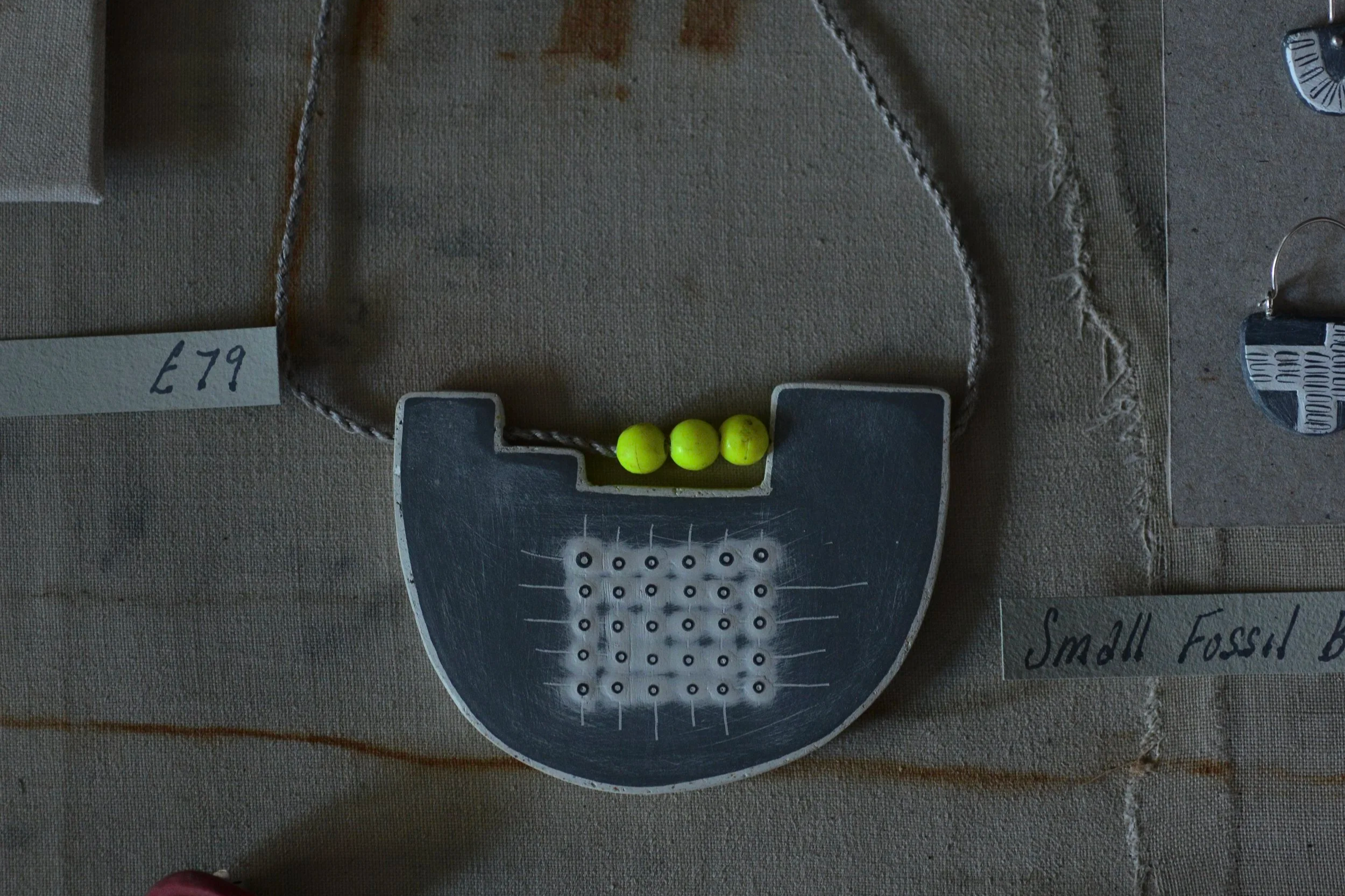
There’s just something about plastic, there's something about those really bright pinks and oranges. It’s like you're getting a sugar rush. I work with a local school, they collect all their felt tip pens for me. I’ll use the barrels to make necklaces, but I’ve also started to soak the bit in the middle that still has the colour in. I really wanted to see if I could reconstitute plastic into paint. I did have some success, but I couldn’t make a big enough quantity.
The science of all of this is moving on so quickly. They’re now able to return plastic to its component parts, and make fuel from it. The worry I have is that people will think we can carry on having this throwaway world - because science will always solve the problem. We don’t know what the consequences will be in the longer term for ourselves, for the more-than-human world, for existence itself. But I think that idea, that circular idea, is really important. I really like the word bricolage. Bricolage is about using what’s to hand. Being resourceful.
Talking on the research you’ve done, I saw that you’ve looked into how bacteria are colonising the nanoplastics in the ocean. I found it so interesting. Has that research developed at all since that point?
There’s these kinds of weird microscopic hybrid marine ecosystems that live on nano plastics in the ocean which are a mixture of plastic, plant, and animal life, and it’s difficult to differentiate between those three things. Scientists are only now turning their attention to exploring these little ecosystems floating around in the ocean.
Then they are also looking at how enzymes can be harnessed to eat plastic. Plastic eating bacteria were first found by researchers sampling plastic-contaminated sediment in Japan and its being looked at as a potential solution. It's unsettling, it’s hopeful, the idea that the Earth can somehow overcome all the terrible things that we throw at it, that nature somehow will adapt.
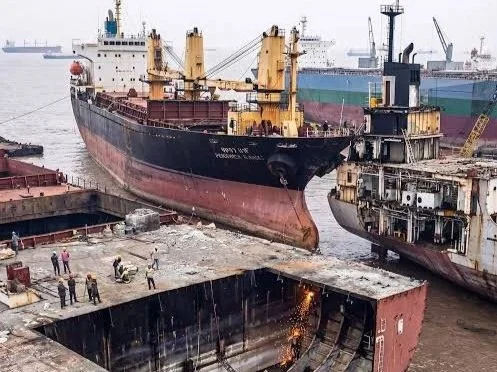
So as you mentioned earlier, you live opposite an oil refinery. I really like the tension this creates between the natural and the man-made. Could you give us a description of the setting that surrounds your studio?
I live down a track, you couldn’t call it a road really. I’m next to a little bay just off Milford Haven. On the bay, we have the oil refinery. And it’s huge. And it hums. Sometimes it’s really loud, sometimes it's really quiet. But it’s a constant presence. At nighttime it looks like Disneyland. It's covered in pink light, and it shines across the water. So this very beautiful, very natural environment is dissected by these large steel structures.
In terms of natural ecology, it's extraordinarily rich. At the moment it’s the spring tides, meaning we get really, really low tides, and this whole world is revealed that’s normally covered in water. It’s like the mud is fizzing with life. It’s a time when you can go and collect scallops and oysters and mussels and cockles, just what you’d like for your tea. Incredible range of seaweeds, extraordinary wading birds. So, there’s a really stark contrast between the refinery and the wildlife.
You co-run an art collective, Caer Colch, meaning Closing the Circle. Could you discuss the significance of the name?
We live in a world bursting at the seams with stuff. So, if you’re like me and have a compulsion to make more, then I think we have a responsibility to think about the circularity of what we make. Do we understand where it’s come from? Where is it going to go? At least starting with a sense of responsibility for what we use and what will happen to it afterwards.
Wonderful, I’m a big fan of the foraging workshops that you’ve been doing with your collective. Have you got any workshops coming up?
There isn’t a foraging one at the moment, but Molly Mcleod and Rose Sanderson have a really interesting one coming up - looking into the connections between scientists, artists, and nature.
And what upcoming projects are you excited about? What have you got coming up?
It’s fantastic being a featured maker here, I’m really pleased with how it’s looking. I’m going straight into a two year project with Mission Gallery in Swansea. There’ll be an exhibition starting in July, with lots of workshops and seminars. Hopefully that will culminate in establishing a network of practitioners to push out the message you can be more sustainable as an artist. I'll be at The Eisteddfod, and the Bovey Tracy craft festival in Devon. A busy, busy summer!
Discover more from Bronwen Gwillim by visiting Bronwen Gwillim | Jewellery from Repurposed Plastic, and keep up with her latest work and announcements on Instagram @bronwengwillim.